
From Checklists to Intelligence: The Evolution of Safety Systems
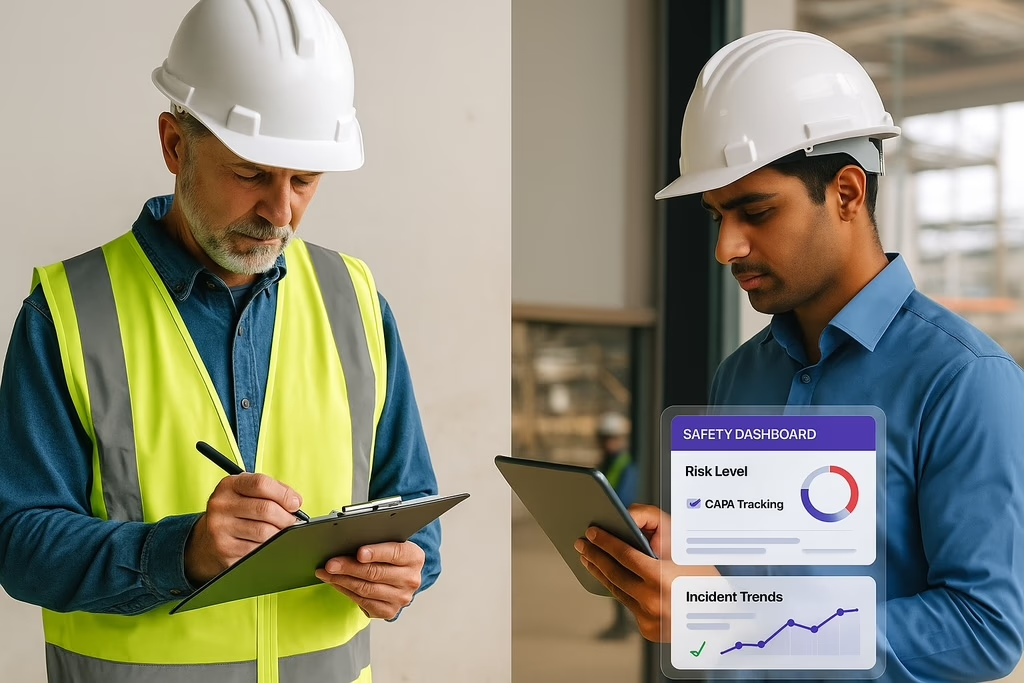
For most of the last century, safety management ran on checklists, inspections, and paperwork. Those tools created consistency and a record of what happened. They rarely prevented the next incident. Organizations are now moving past record-keeping toward a system of intelligence that turns the data they already collect into something teams can act on.
The Limits of Traditional Checklists
Checklists and forms have anchored safety programs for decades. They set a standard and produce a record of compliance. In practice they often become a routine. Workers check boxes at the end of a shift. Supervisors file a report after an incident. The data piles up in spreadsheets and filing cabinets, where nobody looks at it together.
That leaves a lag between what happens on the floor and what leaders know. By the time a trend is visible or an issue escalates, the window to act has usually closed.
The Shift to Digital Recordkeeping
The first change was digitization. Safety platforms replaced paper forms with digital ones, so teams could capture and store information faster. Reporting improved, but the focus was still the record. A near miss might be logged in seconds and analyzed weeks later, if at all.
Digitization fixed storage and access. It did not change how safety decisions got made. The system still looked backward.
The System of Intelligence
The next stage is a system of intelligence, which is what Intero is built to be. Instead of treating incidents, inspections, and near misses as isolated records, it connects them into one continuous view.
- Data becomes dynamic: Every observation feeds one model of the site that learns as more comes in.
- Patterns surface early: Repeated behaviors and hotspots across sites show up while there is still time to act.
- Actions get owners: Corrective and preventive actions (CAPAs) come out of the analysis with an owner and a due date, and a qualified person reviews and signs them before anything is final.
The shift is in the question. Instead of asking what went wrong weeks after the fact, safety leaders can look at where risk is building and act on it now.
Practical Benefits for Safety Teams
For supervisors and safety officers, the difference is tangible:
- Faster response: Unsafe acts and conditions are flagged as they happen.
- Better prioritization: The analysis ranks risks, so teams spend their time on the ones that matter.
- Increased engagement: Workers report hazards in plain language, by text or photo, so contributing takes seconds.
- Audit-ready compliance: Every action is logged with a time, an owner, and the evidence behind it, so a regulatory review is far less of a scramble.
Building a Culture of Prevention
The move from checklists to intelligence is as much about culture as technology. When workers see their reports lead to real changes, they report more. When managers have early indicators instead of a pile of overdue CAPAs, they spend more time coaching and less time chasing paperwork.
The Road Ahead
As these systems mature, the job of the safety professional changes with them. Less time administering compliance, more time leading risk work. The technology does not replace their expertise. It gives them the visibility and the lead time to use it.
The checklist still has its place. The organizations that build a system of intelligence around it will do more than stay compliant. They will see the next incident coming.